


 Aug 21,2026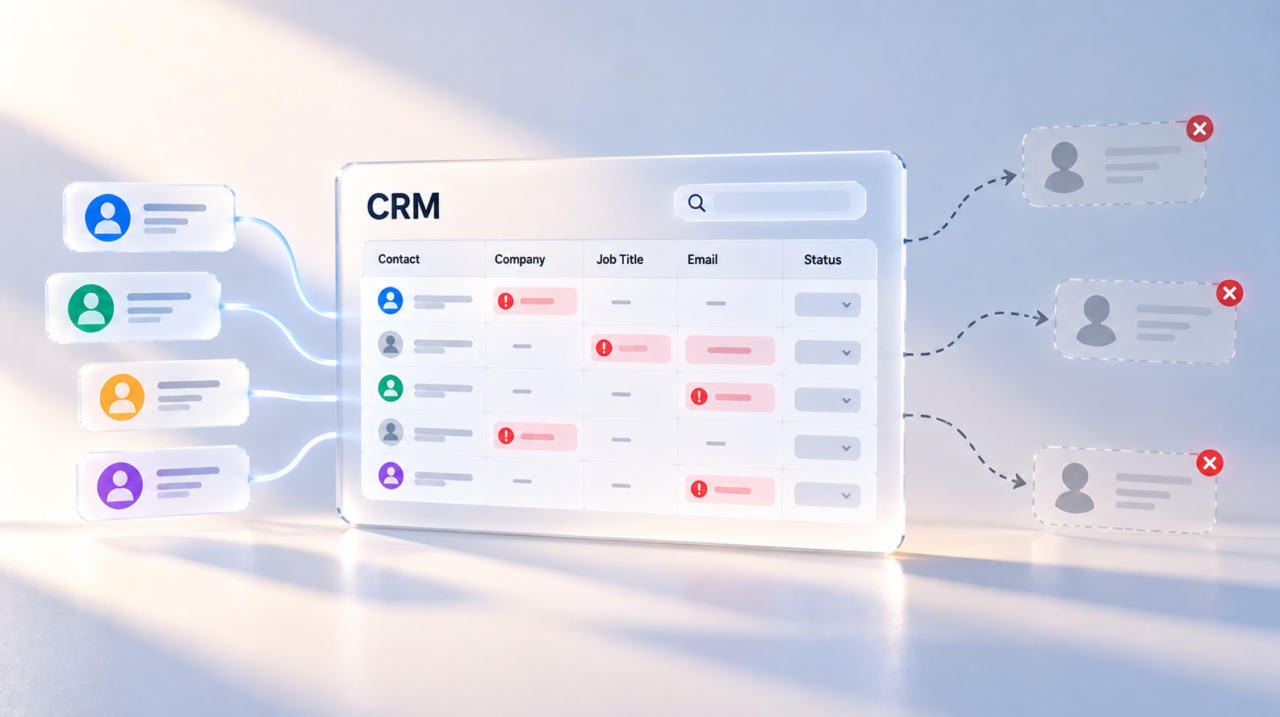
A sales team can research a suitable company, contact the right decision-maker, receive a positive response, and still lose the opportunity when the information is not recorded correctly.
The response may remain in an individual inbox. The CRM may show the prospect as uncontacted. A requested follow-up date may never be added. Another representative may contact the same person without knowing that a conversation has already started.
These issues are often treated as administrative mistakes. Their effect extends across the sales process. Incomplete CRM data influences response time, follow-up, qualification, meeting preparation, account ownership, and performance reporting.
CRM accuracy becomes harder to maintain when prospect research, email, LinkedIn, voice outreach, scheduling, and qualification operate through separate systems. Representatives must transfer information manually while trying to create and advance sales conversations.
Autonoms AI addresses this problem by connecting outbound activities through a coordinated AI workforce. Prospect information, outreach activity, responses, qualification outcomes, meeting details, and next actions can remain connected as work progresses.
What Is Incomplete CRM Data?
Incomplete CRM data occurs when a customer relationship management system does not contain the information required to understand a prospect, review previous activity, or determine the correct next action.
A record may contain a name and email address but lack the person’s current job title, company details, role in the buying process, or relevant account context.
Another record may contain complete contact information but no history of outreach. The team cannot see which messages were sent, how the prospect responded, or whether another employee has taken responsibility.
The prospect’s status may also be inaccurate. A meeting may have been booked while the CRM still shows the person as awaiting contact. A prospect may have requested contact at a later date, but no follow-up has been scheduled.
Completeness does not mean collecting every possible detail. The CRM should contain the information required for targeting, communication, qualification, handoff, reporting, and the next sales action.
How CRM Data Becomes Incomplete
CRM data becomes incomplete when prospect information and sales activities are created outside the CRM but are not transferred into it accurately. The problem may begin with disconnected tools, delayed manual updates, inconsistent data-entry practices, or records that are not reviewed as prospect information changes.
Sales Activities Take Place Across Separate Tools
A typical outbound process may use one platform for account research, another for contact enrichment, separate systems for email, LinkedIn, and calling, a calendar for scheduling, and a CRM for record management.
Each system creates information about the same prospect, but the CRM may receive only part of it. The contact details may be added without the account research, or an email activity may be recorded without the prospect’s response.
When the systems do not share complete information, representatives must transfer the missing details manually. Any information they do not copy remains outside the CRM.
CRM Updates Depend on Manual Data Entry
After an email response or sales call, a representative may need to update the prospect’s status, summarize the conversation, add qualification information, record a follow-up date, and assign the next action.
These updates may be postponed when several prospects respond or the representative is preparing for meetings. When the record is updated later, some details may be forgotten or reduced to a brief note.
The CRM then contains part of the activity without enough context to explain the prospect’s current position or the action already agreed.
Data-Entry Requirements Are Not Standardized
CRM records become inconsistent when representatives use different methods to document the same activity.
One representative may record a referral in a free-text note. Another may change the contact status. A third may create a new contact without linking that person to the original account or conversation.
When required fields, statuses, and documentation rules are not defined, important information may be recorded in different places or omitted completely.
Free-text notes can provide context, but they should not replace structured fields for qualification status, account ownership, meeting details, follow-up dates, and next actions.
Prospect Records Are Not Kept Current
CRM data can be complete when it is first entered and become outdated as the prospect or company changes.
Contacts may change jobs, move between departments, receive promotions, or assume different responsibilities. Companies may adopt new technology, enter new markets, reorganize teams, or change their operating model.
If prospect records are not reviewed and updated, the CRM may continue displaying old job titles, invalid contact details, incorrect company information, or outdated account ownership.
Outdated information makes the record inaccurate even when every required field has been completed.
Prospect Responses Are Not Fully Recorded
A CRM may show that a message was sent without recording the prospect’s response.
The reply may remain inside an email inbox, LinkedIn conversation, or calling tool. The CRM record then lacks information showing whether the prospect expressed interest, requested more information, provided a referral, raised an objection, asked for later contact, booked a meeting, or opted out.
If the response outcome is not added, the prospect’s status, qualification information, follow-up date, and next action may remain incomplete. The CRM records the outreach activity but not the result that should guide the rest of the sales process.
How Incomplete CRM Data Leads to Missed Sales Opportunities
CRM gaps affect prospect interactions long before an opportunity reaches a closing stage.
Follow-Ups Are Delayed or Missed
A prospect may request more information or ask the company to reconnect on a specific date. If the request is not recorded, the next action depends on one representative remembering it.
The opportunity can be lost when that employee becomes busy, changes roles, or assumes another person has taken responsibility.
A reliable record should show the prospect’s status, requested timing, assigned owner, and next action.
Businesses can automate prospecting, outreach, and follow-ups as one connected process so that prospect activity informs what happens next.
Prospects Receive Duplicate or Conflicting Outreach
When current activity is missing from the CRM, another employee or campaign may contact the same prospect.
The person may receive an introductory email after completing a sales call or continue receiving automated follow-ups after booking a meeting.
Conflicting communication weakens trust and gives the prospect the impression that the company does not coordinate its sales process.
A shared activity history helps the team see which prospects have been contacted, how they responded, and whether outreach should continue.
Qualification Becomes Less Reliable
Qualification depends on account fit, contact relevance, response intent, business need, timing, and other approved criteria.
When this information is incomplete, an unsuitable prospect may progress without enough evidence. A suitable prospect may also be rejected because the information supporting qualification is missing.
Representatives may repeat questions the prospect has already answered through another channel. Two employees may reach different decisions because the original assessment was stored only as a brief note.
Complete records provide evidence for why a prospect progressed, paused, or was disqualified.
Sales Handoffs Lose Important Context
A qualified prospect may move from an AI employee or SDR to an account executive, founder, or sales leader.
The new owner needs to understand the company, the contact’s role, the messages already sent, the prospect’s response, the identified requirement, and the purpose of the meeting.
Without this context, the representative must repeat the research or ask the prospect to provide information already shared.
Poor handoffs create unnecessary work and make the sales process appear disorganized.
Sales Leaders Cannot Trust Their Reports
Sales reporting depends on the quality of the CRM data.
If prospect statuses are outdated, meetings are not recorded, and disqualification reasons are missing, managers cannot determine what is happening across the outbound process.
A campaign may appear to have few responses even when interested conversations remain in inboxes. Another may appear to generate many qualified leads because unsuitable prospects were moved forward without consistent criteria.
Sales leaders may then make decisions about targeting, messaging, staffing, and budget using incomplete information.
Representatives Spend Time Reconstructing Activity
Incomplete CRM records do not remove administrative work. They move it to a later stage.
Representatives must search inboxes, review LinkedIn conversations, examine call notes, check calendars, and ask colleagues what happened.
This work takes time away from qualified sales conversations and creates delays when the next action should already be clear.
What a Reliable Outbound CRM Record Should Show
A useful CRM record should answer four questions:
- Who is the prospect?
- What has happened?
- What is the current status?
- What should happen next?
The record should identify the company, the contact, and their connection to the target market. The activity history should show relevant outreach and responses.
The qualification section should explain whether the account and contact meet the approved criteria, what business requirement has been identified, and why the prospect received the current status.
The record should then name the owner, follow-up date, scheduled meeting, or another next action.
Not every employee needs access to every detail. Permissions should reflect the company’s systems, responsibilities, and data policies. The information required for the next stage should still be available to the appropriate people and AI employees.
How Autonoms AI Keeps CRM Records Updated Throughout Outbound Execution
Autonoms AI provides a coordinated AI workforce that executes prospect research, enrichment, email, LinkedIn and voice outreach, qualification, meeting scheduling, and CRM management.
Specialist AI employees complete these responsibilities as parts of one outbound process. An orchestrator coordinates their work so that prospect information, activity, and outcomes move from one stage to the next.
CRM management is therefore part of the work completed by the AI workforce, not a separate administrative responsibility left for sales representatives after each activity.
Creates and Enriches Prospect Records
The AI workforce researches target companies and prepares the account and contact information required for outreach.
Depending on the available data and connected tools, the prospect record may contain company information, the contact’s role, business email address, phone number, LinkedIn profile, and relevant account context.
This information becomes available to the AI employees responsible for outreach, qualification, scheduling, and CRM management. Sales representatives do not need to recreate the prospect record before every interaction.
Records Multichannel Outreach Activity
Autonoms AI executes email, LinkedIn, and voice outreach as parts of one coordinated workflow.
As outreach takes place, the CRM can be updated with the relevant activity. The sales team can see which prospects have been contacted, which channels were used, and what communication has already occurred.
This helps prevent another representative or campaign from treating an active prospect as a new contact. It also reduces the manual work involved in copying sales activity from separate outreach tools into the CRM.
Updates Records When Prospects Respond
A prospect’s response changes their status and the action required from the AI workforce.
Autonoms AI connects response handling with qualification, follow-up, scheduling, human review, and CRM updates. The prospect record can reflect whether the person expressed interest, requested information, provided a referral, raised an objection, asked for later contact, booked a meeting, or opted out.
The CRM therefore contains both the outreach activity and its outcome. This gives the AI workforce and human sales team the information required to determine what should happen next.
Records Qualification and Meeting Information
When a prospect progresses, Autonoms AI records the information produced during qualification and scheduling.
The record may include the identified business requirement, qualification status, meeting details, assigned representative, future follow-up date, reason for disqualification, and agreed next action.
When the prospect is transferred to a sales representative, the company profile, interaction history, and qualification context are available for review. The representative can prepare for the conversation without repeating research or asking the prospect to provide information already shared.
Gives Sales Teams Visibility and Control
Autonoms AI provides structured prospect records and activity visibility across the outbound process.
Sales teams can review prospect profiles, outreach activity, responses, qualification outcomes, scheduled meetings, and next actions. This gives managers a clearer view of what the AI workforce has completed and where human involvement is required.
Human-in-the-loop oversight allows uncertain information, sensitive communication, strategic accounts, and actions requiring approval to be reviewed by a person.
The business remains responsible for defining its CRM fields, access permissions, approval requirements, qualification criteria, and reporting measures.
Business Benefits of Automated CRM Management
Keeping CRM records updated as outbound work progresses reduces the administrative burden placed on founders and sales representatives. They spend less time entering activities, correcting records, searching different tools, and reconstructing prospect histories.
Complete records also improve sales execution. Follow-ups can reflect previous communication, qualified prospects can be transferred with the appropriate context, and booked meetings can stop unrelated outreach. Representatives can see what has already happened and focus on the next action.
Sales leaders gain more reliable information about prospect activity, qualification, meetings, and workflow delays. This supports better campaign reviews and helps the company identify where prospects are progressing or being lost.
These outcomes form part of the wider business benefits of using an AI workforce for outbound sales.
Conclusion
A CRM should do more than store names and email addresses. It should provide the context required to understand each prospect, review previous activity, and determine the next action.
Incomplete CRM data leads to missed follow-ups, duplicate outreach, weak qualification, poor sales handoffs, and unreliable reporting. It also forces representatives to spend time reconstructing information that should already be available.
Autonoms AI executes research, enrichment, multichannel outreach, qualification, scheduling, and CRM management through a coordinated AI workforce. Prospect information and activity remain connected as the outbound process progresses, giving sales teams clearer records and more time for qualified conversations.
Keep prospect records updated, reduce manual CRM work, and give your sales team the context required for qualified conversations with Autonoms AI.