


 Oct 09,2026
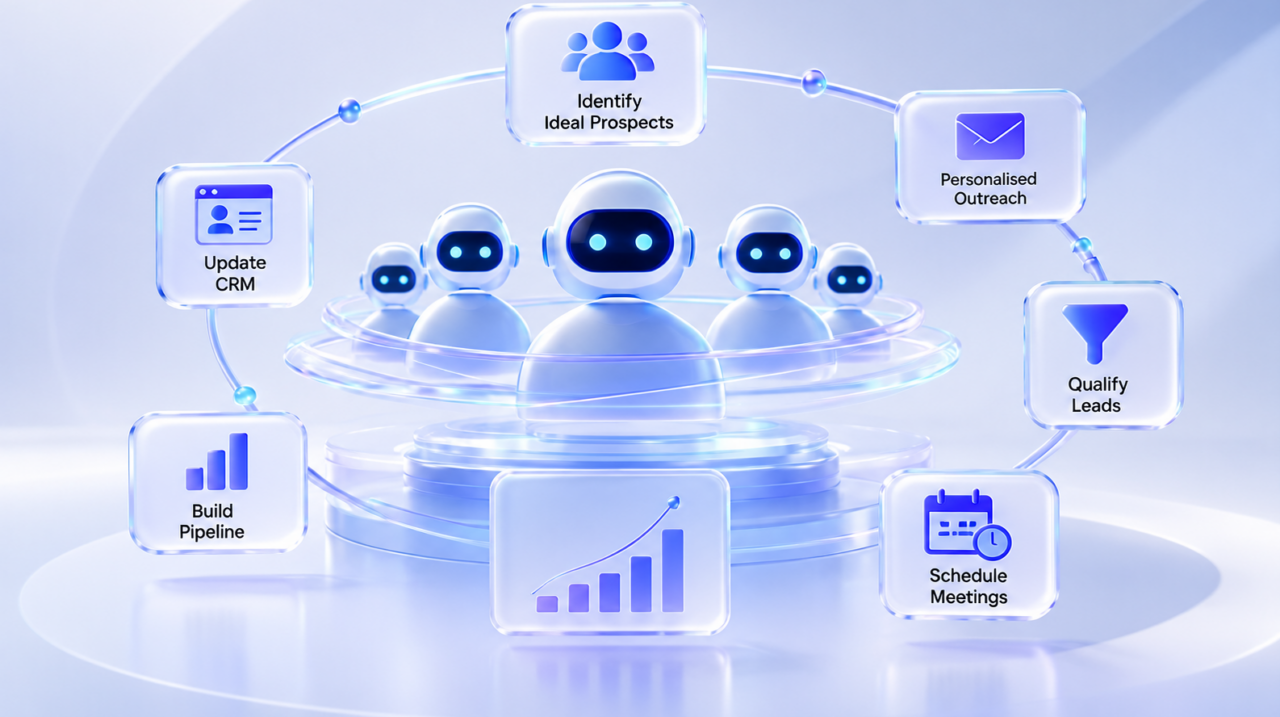
B2B outbound sales involves a series of interconnected activities, including identifying potential customers, researching prospective accounts, initiating conversations, managing follow-ups, qualifying leads, and scheduling meetings.
Traditionally, sales development representatives (SDRs) have managed these activities using prospecting platforms, email automation tools, customer relationship management (CRM) systems, and manual workflows.
While these technologies have improved individual aspects of sales development, managing the entire outbound process still requires significant coordination. As organisations expand their prospecting efforts, maintaining consistent execution across multiple tools, communication channels, and sales activities becomes increasingly complex.
AI workforces are introducing a different approach to outbound sales execution.
Rather than automating individual tasks through disconnected applications, AI workforces use coordinated specialist agents to manage connected activities across the outbound sales process, from prospect research and personalised outreach to follow-ups and meeting coordination.
For sales leaders, this creates opportunities to increase prospecting capacity, improve operational efficiency, and manage pipeline development with less manual coordination.
How AI Workforces Are Changing the Outbound Sales Model
AI workforces are changing outbound sales by moving beyond individual task automation towards coordinated execution across the sales process.
Traditional sales automation platforms typically address specific activities. Prospecting tools help identify potential customers, outreach platforms manage communication sequences, and customer relationship management (CRM) systems track engagement and sales opportunities.
While these tools improve individual activities, sales development representatives often remain responsible for coordinating workflows, transferring information between systems, and determining the next steps.
AI workforces introduce a more integrated approach by using specialised AI agents to manage different activities within a business process. In outbound sales, these agents can handle account research, lead enrichment, personalised outreach, follow-ups, prospect qualification, meeting scheduling, and CRM administration.
An orchestration system coordinates these activities, allowing relevant information to move between agents and enabling subsequent actions based on defined objectives, workflows, and business rules.
By connecting multiple stages of sales development, AI workforces allow organisations to manage outbound activities as a coordinated process rather than a collection of separate tasks.
From Individual Automation Tools to Connected Sales Workflows
Traditional outbound sales processes often require representatives to research prospective accounts, collect contact information, prepare outreach messages, manage follow-ups, review responses, and update CRM records.
Although individual activities may be automated, employees frequently need to coordinate the movement of information between platforms.
With an AI workforce, prospect research can inform personalised outreach, engagement data can support qualification, and qualified leads can progress to meeting scheduling within a connected workflow.
For example, when a research agent identifies a prospect matching predefined targeting criteria, the relevant information can be passed to an outreach agent to prepare an appropriate message. Subsequent responses can then inform follow-up or qualification activities.
The distinction lies in how these activities are connected, coordinated, and executed throughout the sales process.
From Manual Coordination to AI Orchestration
AI orchestration enables specialist agents to operate within a coordinated workflow rather than function as independent automation tools.
An orchestration system manages task sequences, shares relevant information between agents, and initiates subsequent activities according to established business rules.
For example, an outreach agent may require verified account information before generating a personalised message, while a qualification agent needs access to prospect responses to assess potential buying interest.
By coordinating these dependencies, organisations can reduce manual intervention, improve workflow consistency, and maintain better visibility across outbound activities.
Human oversight remains essential for defining campaign objectives, approving sensitive actions, monitoring performance, and ensuring that AI agents operate within established business requirements.
Six Ways AI Workforces Are Transforming B2B Outbound Sales
1. Making Prospect Research More Scalable
Prospect research is an essential part of B2B outbound sales, but identifying suitable accounts and decision-makers can require significant time and resources.
Sales development representatives typically research potential customers, evaluate company characteristics, identify relevant contacts, and determine whether prospects align with the ideal customer profile (ICP).
AI research agents can perform many of these activities by gathering company information, identifying potential buyers, and organising prospect records according to predefined targeting criteria.
Lead enrichment agents can supplement this information with relevant company and contact details, depending on data availability and verification requirements.
For organisations targeting multiple industries, customer segments, or geographic markets, this approach can increase research capacity while reducing the amount of manual information gathering required from sales representatives.
However, the quality of prospect research depends on reliable data and clearly defined targeting requirements. Inaccurate contact information, outdated company records, or poorly specified selection criteria can affect the effectiveness of subsequent outreach.
Regular data validation and clearly established prospect qualification standards remain necessary.
2. Connecting Prospect Intelligence With Personalised Outreach
Effective B2B outreach depends on communicating with relevant prospects using information that reflects their business needs and priorities.
Traditional outreach platforms typically support personalisation through basic contact details, including names, job titles, and company information.
AI workforces can extend these capabilities by connecting account research directly with message development.
For example, a research agent may identify that a prospective customer is expanding into a new market. An outreach agent can use this verified information to prepare a message addressing relevant operational requirements or potential business challenges.
This approach supports more contextual communication without requiring representatives to research and prepare every message manually.
The objective is to improve the relevance and quality of outreach rather than simply increase message volume.
Organisations should maintain clear communication guidelines, validate important prospect information, and monitor message quality to ensure that personalisation remains accurate and appropriate.
3. Coordinating Outreach Across Multiple Channels
B2B outbound sales frequently involves multiple communication channels, including email, LinkedIn, and Voice outreach.
Managing these channels independently can create inconsistencies in prospect engagement, particularly when communication history is not shared across systems.
For example, a prospect may receive an automated follow-up after responding through another channel, or an interested lead may not receive timely attention because their response was not recorded correctly.
AI workforces can help coordinate multichannel outreach by maintaining shared engagement information and adjusting subsequent activities based on prospect interactions.
When a prospect responds to an email, the system can update their engagement status and adjust planned follow-ups. Similarly, a positive response through LinkedIn can initiate qualification or meeting coordination, where the necessary integrations and permissions are available.
This creates a more connected approach to managing prospect communication across channels.
Effective multichannel execution still requires appropriate communication limits, reliable activity tracking, channel-specific policies, and compliance with applicable privacy and outreach regulations.
4. Improving Follow-Up Consistency and Lead Qualification
Managing follow-ups and evaluating prospect responses are important responsibilities in outbound sales development.
Not every prospect responds to an initial message, and responses can indicate different levels of interest, purchasing readiness, or suitability.
AI agents can support these activities by monitoring engagement, categorising responses, and applying predefined qualification criteria.
For example, a prospect requesting a product demonstration may be directed towards meeting scheduling, while an enquiry involving complex commercial requirements can be escalated to a sales representative.
Follow-up agents can also manage communication sequences based on previous interactions, campaign objectives, and established engagement rules.
This helps organisations maintain more consistent follow-up processes and identify opportunities requiring human attention.
However, automated qualification should operate within clearly defined limits. AI agents may misinterpret ambiguous responses or overlook commercial factors that require professional judgement.
Human involvement remains important when managing strategic accounts, complex enquiries, and conversations involving significant purchasing decisions.
5. Reducing Administrative Work and Improving CRM Visibility
Accurate CRM records are essential for tracking sales activities, monitoring opportunities, and evaluating outbound performance.
However, maintaining these records can require considerable administrative effort, particularly when information must be transferred manually between prospecting, outreach, and CRM platforms.
AI workforces can connect CRM administration with other stages of outbound execution.
As prospects progress through research, outreach, qualification, and meeting scheduling, relevant activity records can be created or updated automatically within connected systems.
These updates may include contact information, communication history, engagement status, qualification outcomes, and scheduled meetings.
Reducing manual data entry can improve record consistency and provide sales teams with clearer visibility into prospect activity.
For sales operations and revenue operations teams, more complete records can also support campaign reporting, performance analysis, and pipeline management.
Successful implementation depends on reliable integrations, consistent data standards, appropriate access permissions, and mechanisms for identifying and correcting inaccurate records.
6. Expanding Outbound Sales Execution Capacity
Increasing outbound sales activity has traditionally required organisations to expand their sales development teams or invest in additional automation tools.
Recruiting more sales development representatives can increase prospecting capacity, but it also introduces recruitment costs, onboarding requirements, training, supervision, and ongoing employee expenses.
AI workforces provide an alternative approach to expanding execution capacity by coordinating repetitive and structured sales activities.
Specialist agents can support account research, lead enrichment, outreach preparation, follow-up management, qualification, and CRM administration within connected workflows.
This reduces the amount of manual coordination required from sales representatives and allows them to dedicate more attention to discovery conversations, relationship management, complex sales discussions, and closing opportunities.
For organisations managing growing prospect volumes, AI workforces can also provide greater flexibility in allocating resources across different stages of outbound sales.
However, the financial and operational benefits depend on implementation costs, platform requirements, campaign performance, data quality, and ongoing supervision.
Organisations should evaluate these factors when determining how AI workforces can complement their existing sales teams and support sustainable pipeline development.
Traditional Outbound Sales vs. AI Workforce-Led Execution
Traditional outbound sales and AI workforce-led execution differ primarily in how prospecting activities are coordinated, managed, and completed.
While conventional outbound operations rely on sales representatives and individual automation tools, AI workforces use coordinated specialist agents to support multiple stages of the sales process.
| Sales activity | Traditional outbound approach | AI workforce-led approach |
| Prospect research | SDRs research potential customers using prospecting platforms and manual processes | AI research agents identify and organise accounts based on defined targeting criteria |
| Lead enrichment | Contact and company information is gathered through separate platforms | Enrichment agents collect and update relevant prospect information |
| Outreach preparation | Sales representatives research prospects and prepare messages | Outreach agents generate contextual messages using verified prospect information |
| Multichannel engagement | Communication is managed across separate tools and platforms | Coordinated agents manage activities across supported communication channels |
| Follow-ups | SDRs monitor responses and manage follow-up sequences | AI agents coordinate follow-ups according to predefined engagement rules |
| Lead qualification | Sales representatives assess prospect interest and suitability | Qualification agents classify responses and identify potential sales opportunities |
| Meeting scheduling | Representatives coordinate availability and schedule appointments | Scheduling agents assist with coordinating meetings with qualified prospects |
| CRM management | Sales activities and prospect records are updated manually or through individual integrations | Connected agents record relevant activities and maintain prospect information |
AI workforces do not necessarily replace existing prospecting platforms, communication tools, or CRM systems. Instead, they connect activities across these applications to support more consistent and coordinated outbound execution.
This approach allows sales teams to reduce repetitive administrative work while retaining responsibility for sales strategy, customer relationships, and important commercial decisions.
Applying an AI Workforce to a B2B Sales Operation
Consider a hypothetical B2B software company that provides operational management solutions to mid-sized businesses.
The company wants to expand its outbound sales activities but has a small team responsible for prospect research, outreach, discovery calls, and customer negotiations.
Its existing process relies on multiple platforms for account research, contact enrichment, email outreach, and CRM management. Although these tools support individual activities, representatives must coordinate information between systems, monitor follow-ups, and maintain prospect records.
As outbound activity increases, these responsibilities can limit the time available for engaging qualified prospects and managing sales opportunities.
To address these challenges, the company introduces an AI workforce to coordinate the early stages of outbound sales execution.
1. Defining the ideal customer profile: The sales team establishes targeting criteria based on industry, company size, geographic market, relevant decision-makers, and qualification requirements. These criteria guide prospect identification and subsequent outreach activities.
2. Researching and enriching prospects: AI research agents identify accounts that match the defined customer profile. Enrichment agents then collect relevant company and contact information, subject to data availability and verification requirements.
3. Preparing personalised outreach: Outreach agents use verified prospect information and approved messaging guidelines to prepare communications. Campaign rules determine how messages are reviewed, scheduled, and delivered through supported channels.
4. Managing responses and qualification: As prospects engage, qualification agents categorise responses and assess potential opportunities against established criteria. Enquiries requiring additional context or commercial judgement are directed to sales representatives.
5. Coordinating meetings and sales handovers: Prospects meeting the qualification requirements can progress towards meeting scheduling. Sales representatives then manage discovery conversations, commercial discussions, and relationship development.
Throughout these activities, relevant prospect information, communication history, qualification outcomes, and meeting details are recorded in the connected CRM system.
In this scenario, the AI workforce supports outbound execution by connecting activities that would otherwise require considerable manual coordination. Sales representatives remain responsible for managing customer relationships and advancing qualified opportunities through the sales process.
The company would need to evaluate the effectiveness of this approach using measurable indicators such as qualified meetings booked, prospect engagement rates, pipeline quality, time spent on administrative tasks, and cost per qualified opportunity.
These measures help determine whether AI workforce-led execution delivers meaningful operational improvements and supports the company’s broader sales objectives.
Key Considerations Before Deploying an AI Sales Workforce
While AI workforces can improve outbound sales efficiency and execution capacity, successful deployment requires more than connecting agents to existing sales tools.
Organisations must establish the operational conditions that enable AI agents to perform reliably, maintain appropriate oversight, and engage prospective customers effectively.
Several considerations are important when integrating an AI workforce into existing outbound sales operations.
Data Quality and Targeting Accuracy
The effectiveness of an AI sales workforce depends on the quality of the business information and targeting criteria provided by the organisation.
Businesses need to clearly define their products or services, target industries, ideal customer profile (ICP), relevant decision-makers, and value propositions. This information enables AI agents to identify suitable prospects, conduct account research, and prepare relevant outreach communications.
Incomplete business information, poorly defined targeting criteria, or unclear messaging guidelines can result in irrelevant prospect identification, ineffective personalisation, and poor lead qualification.
Organisations should therefore provide accurate, comprehensive business information and clearly established targeting requirements to guide outbound execution. Prospect information gathered by AI agents should also be validated to maintain outreach accuracy and quality.
Human Oversight and Approval Controls
Although AI workforces can manage multiple stages of outbound sales execution, organisations need to establish clear guidelines for how agents operate and when human intervention is required.
Businesses should define the activities AI agents can perform independently, including prospect research, outreach preparation, follow-up management, and lead qualification, as well as decisions that require human review or approval.
Complex customer enquiries, sensitive communications, strategic accounts, and commercial negotiations may require direct involvement from sales representatives.
Clear approval procedures, escalation rules, and performance monitoring help organisations maintain accountability while allowing AI agents to execute routine outbound activities efficiently.
Integration With Existing Systems
An AI sales workforce needs access to the business applications and communication platforms required to execute outbound sales activities effectively.
Organisations should assess how the AI workforce integrates with their existing CRM systems, email platforms, prospecting tools, and other relevant applications. These integrations enable agents to coordinate outreach, manage prospect interactions, schedule meetings, and maintain accurate sales records.
The assessment should also consider access permissions, data synchronisation, system compatibility, and procedures for handling integration failures.
Reliable integrations help ensure that information flows consistently across the outbound sales process, reducing manual coordination and supporting efficient execution.
Security, Privacy, and Compliance
AI-led outbound sales involves processing business information, accessing connected systems, and communicating with prospective customers. Organisations must ensure that these activities comply with applicable data protection and electronic communication regulations.
Before deployment, businesses should assess how the AI workforce collects, processes, stores, and uses prospect information. This includes reviewing data access permissions, privacy requirements, communication policies, and the security measures implemented by the AI workforce provider.
Appropriate safeguards should also be established to prevent unauthorised access, misuse of sensitive information, and communications that do not align with approved business guidelines.
Clear security and compliance standards help organisations maintain control over their outbound operations while protecting business information and prospect privacy.
Maintaining Outreach Quality
Increasing outbound sales capacity does not automatically translate into better prospect engagement or stronger sales results.
The effectiveness of an AI sales workforce depends on how accurately it identifies potential customers, communicates relevant value propositions, and manages interactions throughout the outreach process.
Organisations should establish clear messaging guidelines, appropriate communication frequency, and prospect engagement standards to ensure that outreach remains relevant and professional.
Regular performance reviews should assess prospect response rates, meeting quality, lead qualification accuracy, and feedback from potential customers.
Maintaining these standards helps businesses expand outbound sales activities without compromising communication quality, brand reputation, or the overall prospect experience.
Conclusion
AI workforces are changing B2B outbound sales by introducing a coordinated approach to prospect research, outreach, qualification, and sales administration.
Traditional automation tools have helped businesses perform individual tasks more efficiently, but managing the overall outbound process can still require substantial manual coordination. AI workforces address this challenge by connecting specialist agents within structured workflows, allowing information and responsibilities to move between different stages of sales execution.
For B2B companies, this creates opportunities to expand prospecting capacity, reduce repetitive work, maintain more consistent engagement, and allow sales professionals to focus on higher-value customer interactions.
However, successful adoption depends on more than deploying AI agents. Businesses need clear targeting criteria, accurate information, reliable system integrations, defined approval procedures, and appropriate human supervision.
The strategic opportunity lies in combining automated execution with human judgment rather than treating the two as competing approaches.
As outbound sales operations become more connected, businesses will increasingly need systems capable of coordinating multiple responsibilities rather than automating tasks in isolation.
Autonoms AI supports this approach through an AI workforce designed for outbound execution, coordinating specialist AI agents across prospecting, outreach, qualification, scheduling, and CRM management while maintaining human oversight.