


 Aug 21,2026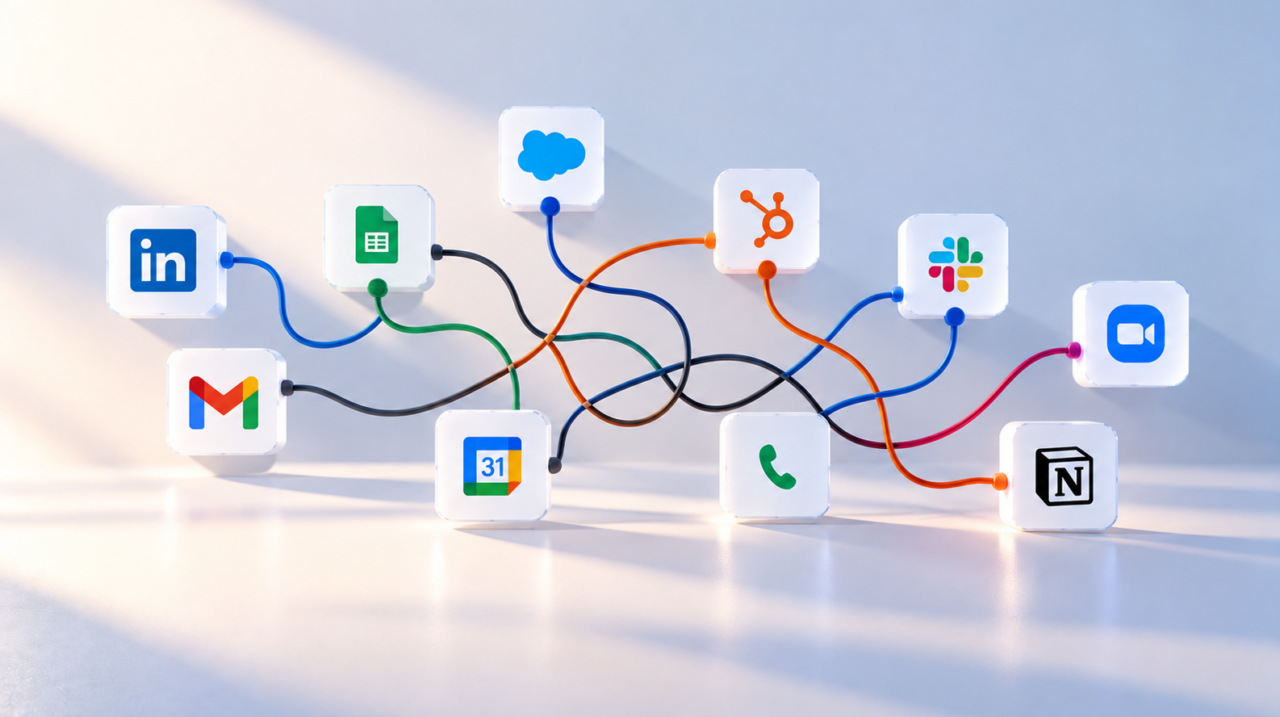
Outbound sales teams use technology to complete almost every stage of their work.
One platform may provide prospect data, another enriches contact information, and another manages email sequences. LinkedIn activity, sales calls, meeting scheduling, and CRM updates may operate through separate systems.
Each tool may perform its individual function effectively. The problem appears when information and tasks must move from one system to another.
Sales representatives may still need to export lists, copy prospect information, monitor several inboxes, review responses, stop active sequences, schedule meetings, and update CRM records manually. The technology completes individual tasks, but the team remains responsible for coordinating the process.
This fragmentation creates delays, incomplete information, conflicting outreach, and administrative work. It can limit outbound capacity even when the company has invested in several capable sales tools.
Autonoms AI addresses this problem by coordinating research, enrichment, multichannel outreach, qualification, scheduling, and CRM hygiene through one operating system.
What Are Disconnected Sales Tools?
Disconnected sales tools are applications that support parts of the sales process without sharing enough context, status information, or workflow logic to operate as one system.
A prospecting platform may identify a suitable company but not transfer the research context into the email tool. A LinkedIn response may not stop an active email sequence. A call may produce qualification information that never reaches the CRM. A booked meeting may remain disconnected from the conversation that created it.
The tools do not need to be completely isolated to create fragmentation. Basic integrations may transfer names, email addresses, or status fields while leaving the team responsible for deciding what should happen next.
A connected outbound process requires more than data synchronization. It must coordinate tasks, prospect context, campaign status, handoffs, approvals, and next actions across the workflow.
Why Sales Technology Becomes Fragmented
Sales technology often becomes fragmented gradually.
A company may first purchase a contact database to support prospecting. It then adds an email platform, a LinkedIn tool, a calling system, a scheduling application, and a CRM. Each purchase addresses an immediate requirement.
As the business grows, new tools may be added for enrichment, personalization, lead scoring, reporting, or data cleaning.
The result is a collection of applications selected at different times for different purposes. The sales team becomes the connection between them.
The problem is not necessarily the number of tools. A company may need several specialized systems. The problem is the absence of a shared operating process that determines how information and work move between them.
How Disconnected Tools Affect Outbound Sales
Fragmentation creates work that is not always visible in sales activity reports.
Representatives Transfer Information Manually
A researcher may export a prospect list into a spreadsheet before uploading it to an outreach platform. A representative may copy notes from LinkedIn into the CRM or enter call outcomes after every conversation.
Each transfer consumes time and creates another opportunity for information to be lost, duplicated, or entered incorrectly.
Manual transfer also delays the next stage. Outreach cannot begin until the data has been prepared, qualification cannot happen until the response is reviewed, and the sales representative cannot prepare for a meeting until the context has been assembled.
The company may own several automation tools while the overall workflow remains dependent on manual coordination.
Prospect Context Is Lost Between Stages
Account research may explain why a company is relevant, which business signal led to its selection, and which department is likely to own the identified problem.
If the outreach tool receives only the prospect’s name, company, title, and email address, much of this context is lost. The resulting message may rely on a generic template even though useful research has already been completed.
The same issue can occur during qualification and sales handoff. A prospect may describe a specific business requirement in an email or call, but the sales representative receiving the meeting may see only a calendar invitation with little supporting context.
Information creates value when it remains accessible to the people responsible for each stage of the outbound process.
Outreach Becomes Repetitive or Conflicting
Email, LinkedIn, and voice outreach can support one another when they use shared prospect information and campaign status.
When each channel operates separately, the prospect may receive messages that repeat the same introduction or present different versions of the offer.
A person may reply through LinkedIn while the email sequence continues. Another may book a meeting after a call and still receive a message asking whether they are available for a conversation.
Conflicting communication can weaken trust and make the company appear uncoordinated.
A multichannel process should recognize what has already happened and adjust the next action across every active channel.
Follow-Ups Are Delayed or Missed
Follow-up often depends on prospect behavior.
A contact who has not responded may remain in the approved sequence. A person who requests information needs a different message. Future interest requires a later follow-up date, while an opt-out must stop communication.
Disconnected systems make these distinctions harder to manage.
Representatives may need to review several platforms to determine whether the prospect responded elsewhere. They may postpone follow-up while confirming the contact’s current status.
Businesses can automate prospecting, outreach, and follow-ups more effectively when prospect information and activity remain connected.
Qualification Happens Without Complete Information
A prospect’s response should be assessed alongside the account profile, contact role, previous outreach, business requirement, and approved qualification criteria.
When this information is spread across several tools, the person reviewing the response may see only part of the context.
A suitable prospect may be delayed or assigned the wrong next action. An unsuitable contact may progress to a meeting because the reviewer cannot see that the company falls outside the target market.
Qualification becomes more reliable when account research, interaction history, response intent, and business rules are available within the same workflow.
CRM Records Become Incomplete
The CRM is expected to provide a complete view of the prospect, but much of the activity may take place outside it.
If representatives must record every email, LinkedIn interaction, call, qualification outcome, meeting, and next action manually, updates may be delayed or overlooked.
The CRM then provides an incomplete view of the outbound process. Sales leaders cannot see which prospects are active, what happened during previous interactions, or where action is required.
As explained in How Incomplete CRM Data Leads to Missed Sales Opportunities, these gaps can result in missed follow-ups, poor handoffs, duplicate communication, and unreliable reporting.
Performance Data Remains Divided
Each tool may provide its own activity report.
The email platform reports messages and replies. The calling system reports dials and conversations. The calendar shows meetings, while the CRM records opportunities.
Sales leaders still need to connect these reports to understand how prospects moved through the complete process.
High activity in one system may not represent business value. A campaign may send many emails without producing qualified responses. A calling tool may record conversations without showing whether the accounts matched the ideal customer profile.
A coordinated view makes it easier to examine the relationship between targeting, outreach, qualification, meetings, and sales outcomes.
The Business Cost of Sales Tool Fragmentation
Disconnected tools create costs beyond software subscriptions.
Sales representatives spend time transferring information, checking campaign status, correcting records, reviewing several communication channels, and preparing manual reports.
Managers spend time resolving ownership conflicts, investigating missing activity, and determining why prospects failed to progress.
Fragmentation can also reduce the value of prospect data. The company may pay for research and enrichment that never influences personalization or qualification.
Adding more sales activity can increase these problems. Every additional prospect creates more information, communication, and handoffs for the team to coordinate.
The company may respond by hiring more representatives, even though part of the capacity problem comes from the workflow rather than insufficient headcount.
Why Adding Another Tool May Not Solve the Problem
A new tool may improve a specific activity. It does not automatically improve the complete outbound process.
For example, a better enrichment platform may provide more contact information. The team may still need to transfer the data into outreach, maintain campaign status across channels, qualify responses, and update the CRM.
A new email tool may improve sequence management, but it may not coordinate LinkedIn responses, voice conversations, meeting bookings, and qualification outcomes.
Before adding another application, the company should identify whether it lacks capability or lacks coordination.
If the required capabilities already exist across the sales stack, the stronger requirement may be a system that organizes how those tools, tasks, and decisions work together.
What a Coordinated Outbound Process Requires
A coordinated outbound process should preserve prospect context from research through sales handoff.
It should identify which task comes next, which information is required, which system or employee should complete the work, and which conditions require human review.
The process should recognize changes in prospect status. A response should affect follow-up. A referral should introduce a new contact. A qualified prospect should move to scheduling. A booked meeting should stop unrelated outreach and update the CRM.
Coordination also requires visibility. Sales teams need to see prospect profiles, completed activities, responses, qualification outcomes, scheduled meetings, and next actions.
This is the role of an operating layer, not simply another isolated automation.
How Autonoms AI Coordinates Outbound Execution
Autonoms AI provides a coordinated AI workforce for outbound sales.
Specialist AI employees work across research, enrichment, email, LinkedIn and voice outreach, qualification, meeting scheduling, and CRM hygiene. An orchestrator coordinates these responsibilities and helps move context between stages.
The following capabilities show how Autonoms AI addresses the operational gaps created by disconnected sales tools.
Coordinates Specialist AI Employees
Autonoms AI assigns different outbound responsibilities to specialist AI employees rather than relying on one general assistant to manage every activity.
Different members of the AI workforce can support company research, prospect enrichment, outreach, qualification, scheduling, and CRM management. The orchestrator coordinates their work so that each stage can use the information produced earlier in the process.
This coordinated structure is a central part of an AI workforce operating system, which connects specialist AI employees, shared information, workflows, and human oversight.
Connects Research With Outreach
Research and enrichment prepare the prospect and account context required for communication.
Autonoms AI makes this information available within the wider outbound workflow. Email, LinkedIn, and voice outreach can use shared company and contact context rather than beginning with separate records.
This helps keep messaging aligned with the company’s approved value proposition, campaign objective, and buyer context.
Coordinates Activity Across Channels
Autonoms AI supports email, LinkedIn, and voice outreach as parts of the same outbound process.
Prospect activity can inform what should happen next. A response, request for later contact, booked meeting, or opt-out can change the contact’s status and the appropriate next activity.
This reduces dependence on representatives checking each platform manually before taking action.
Connects Qualification, Scheduling, and CRM Management
When a prospect responds, the qualification process can use the company information, prospect details, and conversation history already collected.
Qualified prospects can progress to meeting scheduling, while uncertain, sensitive, or complex conversations can be directed to a human for review.
As the workflow progresses, Autonoms AI can update the prospect record with relevant information, outreach activity, qualification status, meeting details, and agreed next steps.
This gives the human sales team a more complete handoff with the context needed to prepare for the conversation.
Maintains Human Oversight and Visibility
Autonoms AI includes human-in-the-loop oversight for outbound activities that require review, approval, or judgment.
The organisation retains control of its ideal customer profile, campaign strategy, messaging requirements, qualification criteria, approval rules, permissions, and strategic accounts. Human reviewers can examine uncertain or sensitive activities and intervene when required.
Autonoms AI provides structured outputs and visibility into the activities completed by the AI workforce. This allows sales leaders to review prospect information, outreach activity, qualification results, scheduled meetings, and areas requiring attention.
The platform coordinates outbound responsibilities and connected tools, but the organisation must still define its processes, access permissions, data requirements, operating rules, and performance measures. This keeps execution aligned with the organisation’s sales objectives and governance requirements.
Business Benefits of a Coordinated Sales Workflow
Coordination reduces the manual work required to move information and tasks between sales systems.
Representatives spend less time exporting lists, copying notes, checking several platforms, and reconstructing prospect history.
Shared context can support more relevant outreach and stronger qualification. Prospect responses can influence the next action more quickly, and meetings can reach representatives with useful account and conversation information.
Managers gain greater visibility into the complete process rather than relying only on activity reports from individual tools.
These improvements contribute to the wider business benefits of using an AI workforce for outbound sales.
Conclusion
Sales tools create value when they help the team complete important work. They become a constraint when representatives must coordinate every transfer, status change, and handoff manually.
Disconnected systems can cause prospect context to disappear, outreach to conflict, follow-ups to be missed, qualification to rely on incomplete information, and CRM records to fall behind.
Autonoms AI connects specialist AI employees across research, enrichment, multichannel outreach, qualification, scheduling, and CRM hygiene. An orchestrator coordinates their activities, while human-in-the-loop oversight provides visibility and control.
Coordinate your outbound tools, tasks, and prospect information through one AI workforce. Get started with Autonoms AI.