


 Jul 17,2026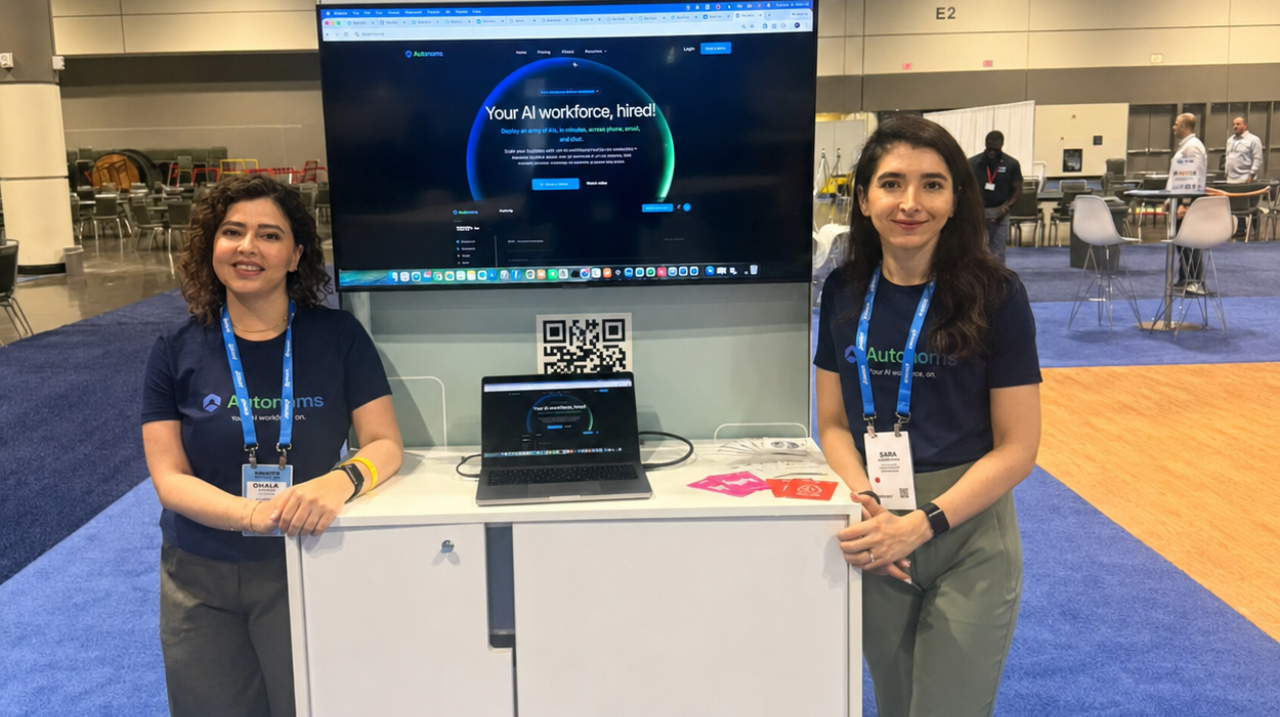
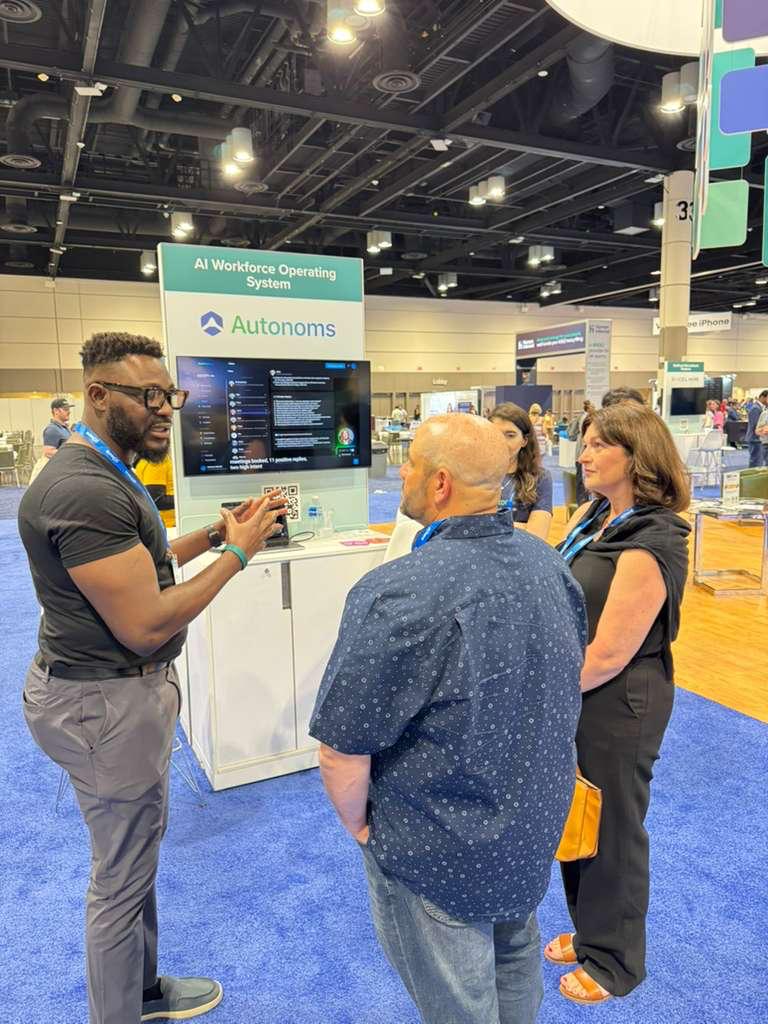
We recently exhibited at the SHRM26 Startup Pavilion in Orlando, where we introduced Autonoms AI by Loubby AI to HR leaders, workforce innovators and decision-makers exploring the next phase of work.
For us, SHRM26 was more than an event. It was an opportunity to share how we are thinking about the shift from simply using AI tools to managing AI workforces that can support real business execution.
We showcased Autonoms AI, our AI Workforce Operating System built to help companies create, manage and supervise autonomous AI employees.
The conversations we had at SHRM26 confirmed something we believe strongly. Businesses are no longer just asking whether they should use AI. They are asking how AI can be structured, governed and trusted inside real operations.
That is the problem Autonoms AI is being built to solve.
Moving Beyond Single AI Assistants
Many companies are already experimenting with AI assistants, copilots, chatbots and automation tools. These tools can be useful, but they often solve isolated tasks rather than coordinated business workflows.
Understanding the difference between AI employees and AI agents helps explain why a coordinated AI workforce goes beyond a single assistant.
Autonoms AI takes a different approach.
Instead of giving companies one assistant, we help them build a coordinated AI workforce. These AI employees can be named, assigned specific routines, connected to company knowledge and supervised through human oversight.
This means AI can move beyond answering questions or generating content. It can support real execution across repeatable business processes.
What We Demonstrated at SHRM26
During the event, we showed how companies can provision a virtual AI company in minutes and begin assigning work across different functions.
We demonstrated how Autonoms AI can support workflows such as:
- Company knowledge management
- Prospect and account research
- Data enrichment
- Lead scoring and prioritisation
- LinkedIn outreach
- Email outreach
- Cold calling
- Lead qualification
- Meeting management
- CRM updates and RevOps
The goal was to show how businesses can scale execution without simply scaling headcount or adding more disconnected tools.
For many teams, the challenge is not a lack of software. The challenge is that work still depends on too many manual steps, scattered systems and repetitive follow-ups.
Autonoms AI is designed to bring structure to that execution layer by coordinating specialist AI employees across connected workflows.
Why Human Oversight Still Matters
One of the strongest themes from our conversations at SHRM26 was the importance of control.
Companies want AI to help them move faster, but they also need visibility, governance and accountability. They need to know what AI employees are doing, when human approval is required and how outcomes are being measured.
That is why human oversight is central to how we are building Autonoms AI.
We do not believe the future of work is about removing people from the process. We believe it is about giving people better systems for managing work, delegating repeatable execution and staying involved where judgment matters most.
Human oversight allows businesses to:
- Define what AI employees can access
- Establish roles and permissions
- Approve sensitive or important actions
- Review how tasks are completed
- Intervene when human judgment is required
- Monitor performance and outcomes
- Maintain accountability across workflows
This approach combines the speed and consistency of AI execution with human direction and control.
Building the Operating System for Autonomous Work
Our time at SHRM26 reinforced the need for a new way to organise AI inside companies.
The next phase of work will not be defined by isolated AI tools alone. It will be shaped by systems that allow businesses to manage AI employees with structure, shared memory, routines, permissions and measurable outcomes.
An AI Workforce Operating System provides the coordination layer required to manage this new model of work.
Instead of asking employees to move information manually between disconnected tools, companies can assign responsibilities to specialist AI employees and coordinate their work through an orchestrator.
For example, one AI employee can research prospective customers, another can enrich company information, another can prioritise leads and another can manage outreach. Their work can be coordinated within one system, with people supervising important decisions.
This allows businesses to focus on outcomes rather than managing every repetitive task individually.
From Using AI Tools to Managing AI Workforces
The shift towards AI workforces requires companies to think beyond the capabilities of individual tools.
Businesses must also consider:
- How AI employees are assigned responsibilities
- How they access company knowledge
- How tasks move between them
- How decisions are reviewed
- How permissions are controlled
- How performance is measured
- When work should be escalated to a person
These questions are becoming increasingly important as AI moves from experimentation into business operations.
A company may begin with one automated task, but as the number of AI-supported workflows grows, it needs a system for coordinating execution and maintaining visibility.
That is where an AI Workforce Operating System becomes essential.
What SHRM26 Reinforced for Us
The conversations, feedback and interest we received at SHRM26 strengthened our belief that businesses need more than additional AI tools.
They need a structured way to manage autonomous work.

Companies want AI that can support real execution, but they also want to remain in control. They need systems that bring AI employees, company knowledge, recurring workflows, permissions and human oversight together.
That is what we are building with Autonoms AI.
Autonoms AI is designed to help organisations create and manage coordinated AI workforces that can execute repeatable business processes while keeping people involved in important decisions.
Our experience at SHRM26 reinforced the direction we are taking and the need for an operating system built specifically for this next phase of work.
The Future of AI Workforces
The future of work will not be shaped by AI operating without people. It will be shaped by businesses learning how to combine autonomous execution with human judgment.
AI employees can handle recurring research, communication, coordination and administrative activities. People can provide strategy, context, creativity, relationship-building and oversight.
For this model to work, companies need more than isolated assistants. They need a system that gives AI employees clear responsibilities, shared knowledge, structured routines and appropriate supervision.
Autonoms AI is building that system.
Visit https://autonoms.ai/ to learn how an AI Workforce Operating System can help your organisation create, coordinate and supervise AI employees.