


 Jul 10,2026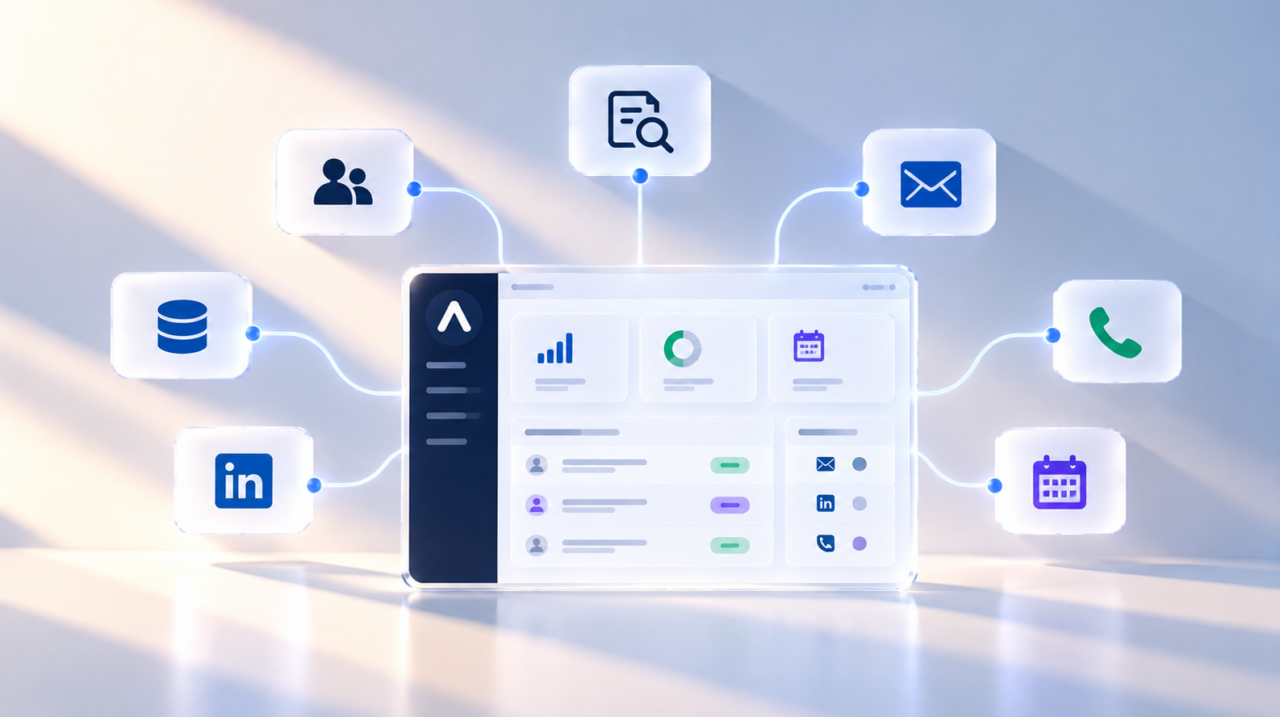
Autonoms AI is an AI Workforce Operating System that helps organisations deploy, coordinate, and supervise specialist AI employees across business workflows.
Our first AI workforce is built for outbound sales execution. This AI SDR team supports prospect research, lead enrichment, LinkedIn outreach, email outreach, voice outreach, lead qualification, meeting scheduling, follow-up, and CRM hygiene.
Rather than requiring teams to manage disconnected tools or repetitive manual processes, Autonoms AI coordinates these activities through specialist AI agents working together as one connected workforce. An orchestrator manages execution across the agents, while human-in-the-loop oversight ensures organisations retain visibility, control, and decision-making authority.
Outbound execution is our first market focus, but Autonoms AI is designed to support additional AI workforces across other business functions as the platform expands.
Autonoms AI as an AI Workforce Operating System
Autonoms AI is built to help organisations manage AI employees as part of how work gets done.
Many businesses already use AI tools for writing, research, automation, and support. The challenge is that these tools often operate separately. One tool may help with data, another may help with messaging, another may manage scheduling, and another may update records.
Autonoms AI brings AI employees into a more coordinated operating model.
As an AI Workforce Operating System, Autonoms AI provides the structure for assigning AI employees to specific responsibilities, coordinating their work across workflows, connecting them to business context, and keeping humans involved where judgment and control are required.
This gives organisations a way to use AI as a supervised workforce, not just as a collection of disconnected tools.
Autonoms AI for Outbound Execution
Autonoms AI currently focuses on outbound execution because outbound sales requires consistent action across several connected stages.
A strong outbound motion depends on accurate research, clean data, relevant messaging, multi-channel engagement, timely follow-up, proper qualification, smooth scheduling, and reliable CRM hygiene. When one stage is weak, the entire pipeline can be affected.
Sales and growth teams need to find the right accounts, identify decision-makers, research each prospect, enrich lead and company data, prepare outreach across channels, manage follow-ups, review responses, qualify opportunities, schedule meetings, and update CRM records.
When these activities are handled manually, execution can become slow, inconsistent, and difficult to track. When they are spread across multiple tools, teams can lose visibility into what has been completed, what needs review, and where the outbound process is slowing down.
Autonoms AI brings these activities into one coordinated AI workforce for outbound execution. Specialist AI employees handle different parts of the workflow, while the orchestrator manages handoffs and human-in-the-loop oversight keeps the process visible, controlled, and aligned with business goals.
The Autonoms AI Workforce Model
Autonoms AI provides businesses with a coordinated AI workforce for outbound sales and customer acquisition.
Instead of giving users one general-purpose assistant, the platform provides specialist AI agents that work across different stages of the outbound process. Each agent has a defined role and contributes to a specific part of the workflow.
A traditional outbound stack may include separate tools for prospecting, enrichment, LinkedIn outreach, email outreach, cold calling, scheduling, CRM updates, and reporting. This can create tool fragmentation, manual handoffs, and limited visibility across the full outbound motion.
Autonoms AI replaces this fragmented approach with a connected AI workforce.
Each agent specialises in one part of the outbound process. The orchestrator coordinates the agents, and human-in-the-loop oversight keeps execution supervised, controlled, and aligned with business goals.
The Orchestrator: Control and Coordination Layer
The orchestrator is the control and coordination layer that manages execution across the AI workforce. It coordinates all specialist agents, manages sequencing, resolves conflicts, and surfaces decisions that require human judgment.
In outbound execution, the workflow does not happen in one step. Research comes before relevant outreach. Enrichment supports accurate targeting. Qualification happens before a prospect is treated as sales-ready. Scheduling follows demonstrated interest, while CRM updates continue throughout the workflow so the pipeline remains visible and trustworthy.
The orchestrator connects these stages by turning specialist agents into one coherent outbound workforce instead of a collection of isolated tools. It ensures the right agent works on the right task at the right time, with the right context.
Human-in-the-Loop Oversight
Autonoms AI includes human-in-the-loop oversight to keep AI execution controlled, supervised, and aligned with business goals.
The human-in-the-loop role is responsible for oversight, approvals, and final decisions. This includes reviewing agent output, setting campaign strategy, correcting mistakes, and overriding agent actions when needed.
When agent confidence is low or a decision requires human judgment, the workforce can escalate to the human-in-the-loop oversight instead of continuing without review.
This is important because outbound execution involves real prospects, real conversations, and real business outcomes. Poor targeting, inaccurate data, irrelevant messaging, or weak qualification can affect brand reputation and pipeline quality.
AI employees help the workforce execute faster, while human oversight keeps the work accurate, controlled, and aligned with business goals.
How the Autonoms AI Workforce Operates
The Autonoms AI workforce executes the outbound pipeline from prospect identification to booked meetings and CRM updates.
The process begins with lead generation and account research. The AI workforce identifies potential companies, maps decision-makers, and builds context around the target audience. This ensures outreach is based on relevant account and buyer information.
Once target accounts and contacts are identified, enrichment agents improve the quality of prospect records. They fill missing information such as verified emails, phone numbers, firmographic data, technographic details, and intent signals.
After the data is prepared, outreach agents manage engagement across multiple channels. LinkedIn outreach, email outreach, and voice outreach work together as part of a multi-touch outbound sequence.
As prospects respond, qualification agents review replies, identify buying signals, apply qualification criteria, and prioritise opportunities worth human attention.
When a prospect is qualified, scheduling agents move the opportunity toward a booked meeting. CRM hygiene agents keep records updated throughout the process so teams can maintain visibility into activity, pipeline movement, follow-up status, and reporting.
This creates a connected outbound workflow where each stage feeds into the next.
The Autonoms AI Agent Workforce
Autonoms AI uses named specialist agents that support different parts of the outbound pipeline.
Each agent has a defined role, a clear area of responsibility, and a business outcome it helps deliver.
| Agent | Role | What they do | Business outcome |
| Marcus | CRM Operations | Keeps the CRM clean, current, and trustworthy. Updates contact records, logs activity, removes duplicates, and flags stale deals. | Accurate pipeline data and cleaner reporting. |
| Jane | Data Enrichment | Fills gaps in prospect records, including verified emails, phone numbers, firmographics, tech stack, and intent signals. | Sales teams work with stronger prospect context before outreach begins. |
| Chidi | Research and ICP Expert | Profiles target accounts and decision-makers in depth. Builds context around triggers, pain points, priorities, and fit. | Outreach becomes more relevant and better aligned with the right buyers. |
| Ami | Apollo Lead Generation | Runs lead generation through Apollo, builds ICP-matched prospect lists, and feeds new leads into the outbound pipeline. | A refreshed pipeline of potential prospects with less manual prospecting. |
| Femi | Import Management | Handles inbound lead lists, cleans data, removes duplicates, normalizes records, and routes imported leads into the right workflows. | Imported leads are organized and ready for the right outbound process. |
| Tobi | LinkedIn Outreach | Supports personalized LinkedIn outreach sequences based on prospect context and research. | A stronger multi-touch presence on LinkedIn. |
| Milli | Email Outreach | Writes and sends personalized cold email sequences based on each prospect’s role, company, and buying context. | More relevant email outreach with better alignment to the prospect. |
| Queen | Qualification Specialist | Scores replies, identifies buying signals, and surfaces opportunities worth human attention. | Sales teams spend more time on qualified opportunities. |
| Nia | AI Cold Calling | Handles AI-powered cold calling outreach as part of the multi-channel outbound sequence. | Higher outbound coverage without increasing calling headcount. |
| Barbara | Qualification Specialist | Applies specific qualification criteria to identify and prioritize the highest-fit leads. | Only the most relevant opportunities move forward. |
Together, these agents form the Autonoms AI outbound workforce. They do not operate as separate tools in isolation. They work as a coordinated team, with the orchestrator managing the flow of work and the human-in-the-loop supervisor keeping execution aligned with business goals.
What Can Autonoms AI Help Businesses Do for Outbound Execution?
Autonoms AI helps businesses scale outbound execution by turning prospecting, enrichment, outreach, qualification, scheduling, and CRM hygiene into one coordinated AI workforce.
Instead of managing each activity across different tools, the Autonoms AI SDR team works across the full outbound workflow. Each stage feeds into the next, giving teams a more structured way to move from prospect identification to qualified meetings and updated CRM records.
1. Build and Refresh Outbound Prospect Lists
Autonoms AI helps businesses build prospect lists that match their ideal customer profile.This includes identifying companies, buyer roles, industries, and segments that fit the business’s outbound goals. Instead of relying only on static lists, the AI workforce helps keep the outbound pipeline active with relevant prospects.
2. Research Target Accounts and Decision-Makers
The AI workforce researches target accounts and decision-makers before outreach begins. This gives the outbound team more context about the company, buyer role, possible pain points, priorities, and relevance to the offer. Better research helps outreach feel more specific and less generic.
3. Enrich Lead and Company Data
Autonoms AI enriches prospect records with useful information such as verified contact details, firmographic data, technographic details, and intent signals.This improves targeting and helps reduce weak outreach caused by incomplete or inaccurate data.
4. Prepare Multi-Channel Outreach
The outbound workforce prepares outreach across LinkedIn, email, and voice. Each channel plays a different role in the outbound sequence. LinkedIn can create familiarity, email can deliver a direct message, and voice outreach can add another touchpoint for qualified prospects.
5. Manage Follow-Up Workflows
Follow-up is one of the most important parts of outbound execution. Autonoms AI helps manage follow-up workflows so interested or unresponsive prospects are not forgotten. This creates more consistency across the outbound process and reduces missed opportunities.
6. Review and Qualify Prospect Responses
When prospects respond, qualification agents review replies, identify buying signals, and apply qualification criteria.This helps separate high-fit opportunities from low-priority responses, so human teams spend more time on prospects worth engaging.
7. Move Qualified Prospects Toward Booked Meetings
Once a prospect is qualified, scheduling agents help move the opportunity toward a booked meeting. This reduces friction between prospect interest and sales conversations, helping teams turn qualified responses into real pipeline opportunities.
8. Keep CRM Records Clean and Updated
Autonoms AI keeps CRM records updated throughout the outbound workflow. This includes logging activity, updating contact records, removing duplicates, flagging stale records, and keeping pipeline information more reliable.
9. Improve Visibility Into Outbound Activity
Autonoms AI gives teams clearer visibility into what is happening across outbound execution. Teams can see what has been completed, which prospects are moving through the workflow, where human review is needed, and how the AI workforce is contributing to pipeline development.
10. Reduce Manual Coordination
A major benefit of Autonoms AI is that it reduces the manual coordination required to manage outbound work. Instead of forcing teams to move between prospecting tools, enrichment tools, outreach tools, scheduling tools, and CRM systems, Autonoms AI coordinates specialist AI employees across the workflow with orchestration and human oversight.
This gives businesses a more structured outbound execution system, while humans remain in control of strategy, review, and decision-making.
Autonoms AI vs Traditional Sales Tools
Traditional sales tools usually solve one part of the outbound process.
A prospecting tool may help find leads. A data tool may enrich contact information. An outreach tool may help send messages. A scheduling tool may book meetings. A CRM may track activity and opportunities.
These tools are useful, but they often operate separately. Teams still have to move data between platforms, decide what happens next, manage follow-ups, check lead quality, update records, and monitor whether the workflow is actually producing qualified opportunities.
This creates a common challenge for sales and growth teams. They may have several tools in place, but the execution still depends on manual coordination.
Autonoms AI focuses on the workflow across these steps.
Instead of treating prospecting, enrichment, outreach, qualification, scheduling, and CRM updates as separate activities, Autonoms AI brings them into one coordinated AI workforce. Specialist AI employees work across different stages of the outbound process, while the orchestrator manages sequencing and handoffs between agents.
This means the workflow can move from lead generation to account research, enrichment, multi-channel outreach, qualification, meeting scheduling, and CRM hygiene with more structure and visibility.
Traditional tools help teams complete individual tasks, while Autonoms AI coordinates AI employees across the outbound workflow with orchestration, human supervision, and visibility, making it more than a single sales automation tool.
Autonoms AI vs a Single AI Sales Agent
A single AI sales agent may handle one part of outbound, such as drafting emails, qualifying replies, preparing account research, or summarising prospect information.
That can be useful, but outbound execution is not one isolated task. It is a connected process that moves across research, data enrichment, messaging, follow-up, qualification, scheduling, CRM updates, and reporting. Each activity depends on the quality of the previous step.
If research is weak, outreach becomes generic. If enrichment is incomplete, targeting becomes less accurate. If replies are not qualified properly, sales teams may spend time on low-fit opportunities. If CRM updates are missed, pipeline visibility becomes unreliable.
Autonoms AI is designed as a coordinated AI workforce, not a single AI sales agent.
Different AI employees handle different parts of the outbound workflow. Research agents build account and buyer context. Enrichment agents improve prospect records. Outreach agents manage multi-channel engagement. Qualification agents identify buying signals and prioritise relevant opportunities. Scheduling agents move qualified prospects toward meetings. CRM hygiene agents keep activity and pipeline data updated.
The orchestrator coordinates these agents so the work moves from one stage to the next with the right context. Human supervision keeps the workflow controlled, reviewed, and aligned with business goals.
A single AI sales agent can help with one step. Autonoms AI coordinates a workforce that executes the full outbound process.
Who Is Autonoms AI For?
Autonoms AI is built for businesses that want to improve outbound execution without relying only on manual prospecting, disconnected tools, or additional sales headcount.
It is especially useful for teams that already understand the value of outbound sales but need a more consistent and structured way to execute it. These teams may have a clear offer, a defined target audience, and revenue goals, but still struggle with the manual work required to research prospects, enrich data, manage outreach, qualify responses, schedule meetings, and keep CRM records updated.
Autonoms AI is relevant for founders and CEOs who need to create more pipeline without immediately building a large SDR team. It gives them a way to increase outbound activity while keeping visibility and control over the process.
Sales leaders can use Autonoms AI to improve consistency across prospecting, outreach, follow-up, qualification, and CRM hygiene. Instead of depending only on manual execution, they can use a coordinated AI workforce to make the outbound process more structured and easier to monitor.
Growth teams can use Autonoms AI to test new markets, buyer segments, industries, and messaging angles faster. The AI workforce can help manage the research, enrichment, outreach, and qualification work needed to support market expansion.
Agencies can also use Autonoms AI to manage outbound execution for clients. Instead of manually coordinating prospect lists, outreach channels, follow-ups, qualification, and reporting, agencies can use the AI workforce to create a more scalable outbound system.
Revenue teams can benefit from Autonoms AI when they need better visibility across outbound activity. With CRM hygiene, qualification, scheduling, and reporting built into the workflow, teams can better understand what is happening across the pipeline.
Autonoms AI is also suitable for small and mid-sized businesses that want to scale customer acquisition without adding too many tools or increasing headcount too quickly.
The best-fit businesses are those that want more than one-off automation. They want a coordinated outbound workforce that can execute across multiple stages of the sales process, while humans remain involved in strategy, review, and final decision-making.
Benefits of Autonoms AI
Autonoms AI helps businesses scale outbound execution with a coordinated AI workforce, human supervision, and workflow visibility. The main benefits include increased outbound capacity, reduced tool fragmentation, stronger workflow consistency, better visibility, improved CRM hygiene, and more time for human teams to focus on higher-value work.
1. Increased Outbound Capacity
Autonoms AI gives businesses more execution capacity by using AI employees to handle repetitive, research-heavy, and time-consuming outbound tasks.
Instead of depending only on human teams to research prospects, enrich data, prepare outreach, manage follow-ups, qualify replies, schedule meetings, and update the CRM, Autonoms AI creates a coordinated AI workforce that executes these activities with more structure.
This helps teams run more consistent outbound activity without immediately adding more SDR headcount.
2. Reduced Tool Fragmentation
Many outbound teams use separate tools for prospecting, enrichment, outreach, calling, scheduling, CRM updates, and reporting.
These tools may be useful, but they often still require manual coordination. Teams have to move data between systems, check what has been done, manage handoffs, and update records manually.
Autonoms AI brings these activities into a more connected workflow through specialist AI employees, orchestration, and human supervision.
3. Stronger Workflow Consistency
Outbound execution depends on consistency.
Research, enrichment, outreach, follow-up, qualification, scheduling, and CRM updates all need to happen in the right order. When these steps are handled manually, it is easy for follow-ups to be missed, records to become outdated, or research to remain incomplete.
Autonoms AI helps create a more repeatable outbound workflow by allowing AI employees to work from approved company context and defined processes.
4. Better Visibility Into Outbound Activity
Autonoms AI gives teams clearer visibility into what the AI workforce is doing.
Leaders can see what work has been completed, which opportunities need attention, where human review is required, and where the workflow can improve.
This makes outbound execution easier to monitor and manage, especially when multiple agents are working across the pipeline.
5. Improved CRM Hygiene and Pipeline Reliability
CRM hygiene is often one of the weakest parts of outbound execution.
When records are not updated, duplicated, or properly maintained, teams lose visibility into pipeline activity. Autonoms AI includes CRM hygiene as part of the workflow, helping teams keep records cleaner, activity better logged, and pipeline data more reliable.
This supports better reporting and more accurate follow-up.
6. More Time for Human Teams to Focus on High-Value Work
The larger value of Autonoms AI is that it gives human teams more time to focus on work that requires judgment, relationships, and strategy.
AI employees handle the execution-heavy parts of outbound, while humans focus on sales conversations, qualification decisions, relationship-building, strategy, and closing opportunities.
This creates a better balance between AI execution and human decision-making.
How Autonoms AI Configures Your AI SDR Team
Autonoms AI uses a guided setup process to configure a personalised AI SDR workforce. The process helps the platform understand the organisation’s goals, website context, target audience, call to action, and sales process before the AI employees begin execution.
Step 1: Define the Goal
The setup begins by asking what the organisation wants to accomplish.
This goal helps Autonoms AI understand the outcome the AI SDR team should work toward. For example, the goal may be to book sales calls, generate leads, research prospects, automate sales operations, or support outbound sales workflows.
This step gives the AI workforce a clear direction from the beginning.
Step 2: Add Website and Business Email
Next, the user provides the company website and business email.
Autonoms AI analyses the website to understand the business, product or service offering, value proposition, target audience signals, brand tone, competitor context, and working model.
This helps the AI agents build company context before they begin outbound execution.
Step 3: Select the Primary Call to Action
The next step is to define what prospects should do when the AI SDR team reaches out.
This could include visiting a website, booking a discovery call, requesting a demo, signing up for a free trial, downloading a resource, or getting a quote.
The CTA helps shape the outreach direction and ensures the AI agents are working toward the right conversion goal.
Step 4: Define the Ideal Customer Profile
Autonoms AI then captures the ideal customer profile.
This includes the target industry, company size, target job titles, and geography. The more specific the ICP, the better the AI workforce can identify relevant accounts, map decision-makers, and prepare outreach that fits the right audience.
Step 5: Add Sales Process Context
The final step allows the user to describe their current sales process or upload a process document.
This gives the AI SDR team more context on how the organisation currently sells, what has worked before, and how the outbound workflow should operate.
It also helps Autonoms AI align the AI workforce with the organisation’s existing sales motion, reporting expectations, and review points.
What Happens After Setup?
After these steps, Autonoms AI uses the information collected to configure a personalised AI SDR workforce for the organisation.
The goal, website context, call to action, ideal customer profile, and sales process details help shape how the AI employees operate. This gives the workforce the context it needs to understand who to target, what message to use, which channels to work across, and what outcome the team should drive toward.
Autonoms AI then provides the AI workspace, specialist agents, orchestration layer, tools, integrations, and human-in-the-loop oversight needed to begin execution. The AI SDR team can then start working across the outbound pipeline, from prospect research and enrichment to outreach, qualification, scheduling, and CRM hygiene.
The organisation does not lose control after setup. Teams can review the information, refine the context, adjust goals, improve messaging direction, and optimise the workflow as needed. Human-in-the-loop oversight also helps monitor performance, review agent activity, and make sure the AI workforce remains aligned with business goals.
This creates a setup process that is both guided and flexible. Autonoms AI configures the workforce, while the organisation keeps visibility and control over how the AI SDR team operates.
Conclusion
Autonoms AI is an AI workforce platform currently focused on outbound execution.
It helps businesses deploy coordinated AI employees that support prospect research, lead enrichment, LinkedIn outreach, email outreach, AI cold calling, qualification, scheduling support, CRM hygiene, and workflow visibility.
The value of Autonoms AI is not only in using AI agents. The value comes from organizing those agents into a coordinated workforce that can support real business execution.
With the orchestrator coordinating the agent workforce and human oversight keeping execution aligned with business goals, Autonoms AI gives businesses a structured way to scale outbound without relying only on manual prospecting or disconnected tools.
Explore Autonoms AI at www.autonoms.ai to learn how your business can build an AI workforce for outbound execution.