


 Sep 18,2026
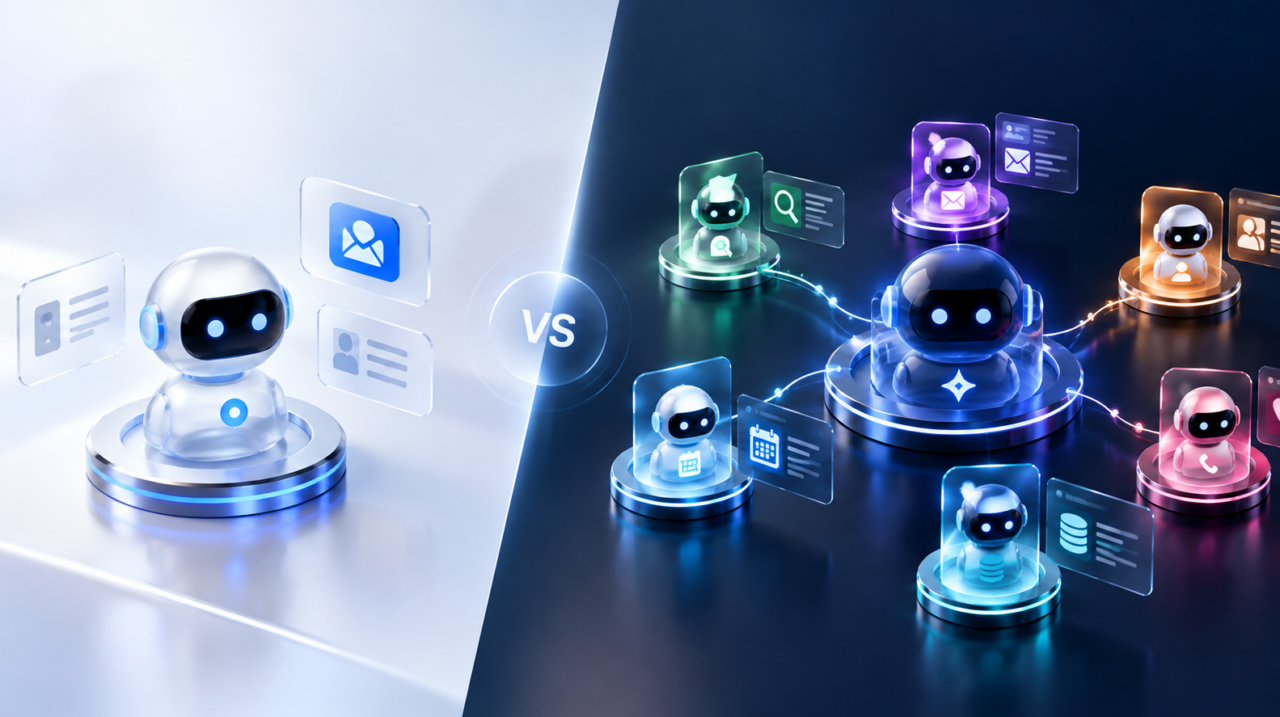
AI agents are becoming increasingly capable of doing real work across the sales process. They can research accounts, enrich data, execute outreach, interpret responses, update CRM records, and pursue defined objectives. Yet deploying more agents does not automatically change how the broader process operates.
An AI workforce introduces a different operating model. Specialized AI workers take responsibility for defined parts of execution, share context across stages, operate through coordinated workflows, and escalate to people when human judgment is required. The focus shifts from what each agent can do individually to how multiple AI workers execute together as part of one connected system.
That is the central difference between AI agents and an AI workforce. Individual agents provide capabilities, while an AI workforce organizes those capabilities around shared responsibilities, context, orchestration, oversight, and business outcomes. This article explains what changes operationally when companies move from deploying individual agents to operating an AI workforce.
What Is the Difference Between AI Agents and an AI Workforce?
An AI agent is generally designed to perform a task, use tools, make decisions within defined parameters, or work toward an objective. A company may deploy one agent for account research, another for enrichment, and another for outreach.
Several agents can operate inside the same company without functioning as a workforce. If they work independently, people may still need to transfer information, coordinate handoffs, monitor workflow state, and determine what happens next.
An AI workforce begins when specialized AI workers operate within a shared execution model. Responsibilities are defined, context moves between stages, and the output of one worker becomes usable input for another. The distinction between AI employees and individual AI agents becomes increasingly relevant as AI takes responsibility for ongoing areas of execution rather than isolated tasks.
Microsoft’s 2026 Work Trend Index reflects this broader shift in how work is being structured. As agents assume more execution, organizations increasingly need to determine what AI should execute, where people should direct the work, and how responsibility for outcomes should be allocated.
Responsibility Moves From Individual Tasks to Defined Areas of Execution
One of the clearest operational changes is how responsibility is assigned.
An individual AI agent may be asked to research a company, find contact information, draft a message, or update a CRM field. Once the task is complete, responsibility for progressing the broader process may still sit with a person or another system.
In an AI workforce, specialized workers can take responsibility for defined areas of execution. A research worker can evaluate accounts and prepare relevant context. An enrichment worker can maintain the account and contact information required downstream. An outreach worker can execute within approved targeting and messaging parameters, while a qualification worker can interpret responses and determine whether the next action remains within the AI workflow or requires human involvement.
The management question therefore changes. Companies need to define not only what an AI worker can do, but what it is responsible for, which information it can access, which actions it can execute, and where its authority ends.
That is a broader operating responsibility than assigning an agent an isolated task.
Coordination Changes Across Outbound Execution
Defined responsibilities only create value when execution remains connected.
In AI-powered outbound sales, research informs account selection. Enrichment strengthens account and contact context. Targeting shapes outreach. Engagement generates responses, responses inform qualification, and CRM operations preserve relevant context and activity throughout the process.
If each AI worker operates with a separate view of the prospect, adding agents can reproduce the same fragmentation companies already experience with disconnected sales tools. A research worker may identify an important account signal that never reaches outreach, while qualification context can be lost when responsibility moves to a person.
An AI workforce therefore requires shared context and orchestration. The system needs to coordinate which worker acts, what information is available, what actions are permitted, and how workflow state changes as execution progresses.
An AI workforce operating system provides this coordination layer across specialized workers, shared context, workflows, permissions, and human oversight.
McKinsey’s 2026 research on agentic AI in B2B sales makes a similar distinction between isolated AI adoption and end-to-end commercial workflows. Its research argues that adding AI to fragmented data, manual processes, and disconnected teams can automate existing complexity rather than resolve it.
The operational value of an AI workforce therefore comes from coordinated execution, not simply from deploying more agents.
Human Oversight and Accountability Change With the Operating Model
Human involvement also changes as AI assumes responsibility for larger parts of execution.
When an agent performs a narrow task, a person can often review its output before deciding what happens next. In an AI workforce, oversight needs to be designed into the workflow because AI workers may continue executing across multiple stages.
Companies need to define which actions AI can execute independently, which require approval, what conditions should trigger escalation, and who becomes responsible when work moves to a person. Human attention can then be concentrated where judgment, relationships, commercial sensitivity, or accountability require direct involvement.
Accountability also needs to move beyond individual agent activity. A research worker should not be considered successful simply because it researches more accounts, just as an outreach worker should not be assessed only by the number of messages executed.
The broader question is whether coordinated execution improves the commercial process. In outbound sales, that can include account coverage, qualified conversations, opportunity creation, pipeline progression, and the efficiency with which the process operates.
Microsoft’s 2026 research also emphasizes the organizational side of agent adoption, including how workflows, management practices, guidelines, and human decision-making influence the value companies derive from AI.
Coordinated Execution Defines the AI Workforce
The difference between AI agents and an AI workforce is operational. Individual agents can perform valuable tasks and pursue defined objectives, while an AI workforce connects those capabilities across a shared process.
That coordination matters in outbound sales, where research, enrichment, targeting, outreach, qualification, and CRM operations depend on context created earlier in the process. Specialized AI workers need defined responsibilities, shared context, permissions, orchestration, and clear points of human oversight if execution is to remain connected.
An AI workforce operating system provides the structure for coordinating those responsibilities across execution. This is the operating model behind Autonoms AI, an AI workforce for outbound execution that keeps specialized AI workers, workflow state, prospect context, and human oversight connected across the sales process.
Moving from individual agents to an AI workforce is not about adding more AI. It is about creating an execution model in which specialized AI workers can operate around the same commercial objective while people retain visibility, judgment, and accountability where they matter.